

Bevel cuts are an essential technique in woodworking, allowing for the creation of angled edges and joints that add both functionality and aesthetic appeal to your projects. A table panel saw is a versatile tool that can be used to make precise bevel cuts with relative ease. As a table panel saw supplier, I am excited to share some tips and techniques on how to make bevel cuts with a table panel saw.
Understanding Bevel Cuts
Before we dive into the process of making bevel cuts, it's important to understand what they are and why they are useful. A bevel cut is an angled cut made across the edge of a workpiece, as opposed to a straight cut that is made perpendicular to the surface. Bevel cuts are commonly used to create joints, such as miter joints and dovetail joints, as well as to add decorative edges to furniture and other woodworking projects.
Preparing Your Table Panel Saw
The first step in making bevel cuts with a table panel saw is to prepare the saw for the task. Here are some key steps to follow:
- Check the Blade: Make sure you have the right blade for the job. A fine-tooth blade is generally recommended for bevel cuts, as it will produce a cleaner cut and reduce the risk of tear-out.
- Adjust the Blade Angle: Most table panel saws allow you to adjust the blade angle to make bevel cuts. Use the saw's adjustment mechanism to set the blade to the desired angle. Make sure to lock the blade in place once you have set the angle.
- Set the Fence: The fence on your table panel saw is used to guide the workpiece as you make the cut. Adjust the fence so that it is parallel to the blade and set at the correct distance from the blade for the width of the bevel cut you want to make.
- Test the Saw: Before you start making bevel cuts on your workpiece, it's a good idea to test the saw on a scrap piece of wood. This will allow you to make any necessary adjustments to the blade angle, fence position, or other settings before you start working on your actual project.
Making Bevel Cuts
Once you have prepared your table panel saw, you are ready to start making bevel cuts. Here are the steps to follow:
- Mark the Workpiece: Use a pencil or marking gauge to mark the location and angle of the bevel cut on your workpiece. Make sure to mark both sides of the workpiece so that you can see the cut line clearly.
- Position the Workpiece: Place the workpiece on the table of the saw, with the marked side facing up. Align the marked line with the blade of the saw, and make sure the workpiece is firmly supported by the table and fence.
- Make the Cut: Turn on the saw and slowly feed the workpiece into the blade, following the marked line. Use a push stick or other appropriate tool to keep your hands a safe distance from the blade. Make sure to keep the workpiece moving steadily and smoothly through the cut.
- Check the Cut: Once you have made the bevel cut, turn off the saw and remove the workpiece from the table. Check the cut to make sure it is clean and accurate. If necessary, make any adjustments to the saw settings and make another test cut on a scrap piece of wood before continuing with your project.
Tips and Tricks
Here are some additional tips and tricks to help you make bevel cuts with a table panel saw:
- Use a Featherboard: A featherboard is a tool that can be used to hold the workpiece firmly against the fence and table of the saw as you make the cut. This will help to prevent the workpiece from shifting or moving during the cut, which can result in an inaccurate or uneven bevel cut.
- Take Your Time: Making bevel cuts with a table panel saw requires patience and precision. Take your time to set up the saw correctly, mark the workpiece accurately, and make the cut slowly and steadily. Rushing through the process can increase the risk of mistakes and accidents.
- Practice on Scrap Wood: If you are new to making bevel cuts with a table panel saw, it's a good idea to practice on scrap wood before you start working on your actual project. This will allow you to get a feel for the saw and the cutting process, and help you to develop the skills and confidence you need to make accurate and professional-looking bevel cuts.
- Use Safety Equipment: Always wear appropriate safety equipment, such as safety glasses, ear protection, and a dust mask, when using a table panel saw. This will help to protect you from flying debris, noise, and dust, which can cause serious injury or health problems.
Choosing the Right Table Panel Saw
As a table panel saw supplier, I know that choosing the right saw for your needs is essential. Here are some factors to consider when choosing a table panel saw for making bevel cuts:
- Blade Size and Type: The size and type of blade on the saw will affect the quality and accuracy of the bevel cuts you can make. Make sure to choose a saw with a blade that is large enough for the size of the workpiece you will be cutting, and that is suitable for the type of wood you will be working with.
- Blade Angle Adjustment: Look for a table panel saw that allows you to easily adjust the blade angle to make bevel cuts. Some saws have a quick-release mechanism that makes it easy to change the blade angle, while others require you to use a wrench or other tool to make the adjustment.
- Fence and Miter Gauge: The fence and miter gauge on the saw are important for guiding the workpiece and making accurate cuts. Look for a saw with a sturdy, adjustable fence and a miter gauge that is easy to use and provides accurate angle measurements.
- Power and Performance: The power and performance of the saw will affect how quickly and easily you can make bevel cuts. Look for a saw with a powerful motor and a high-quality blade that can handle the size and type of workpiece you will be cutting.
Our Table Panel Saw Products
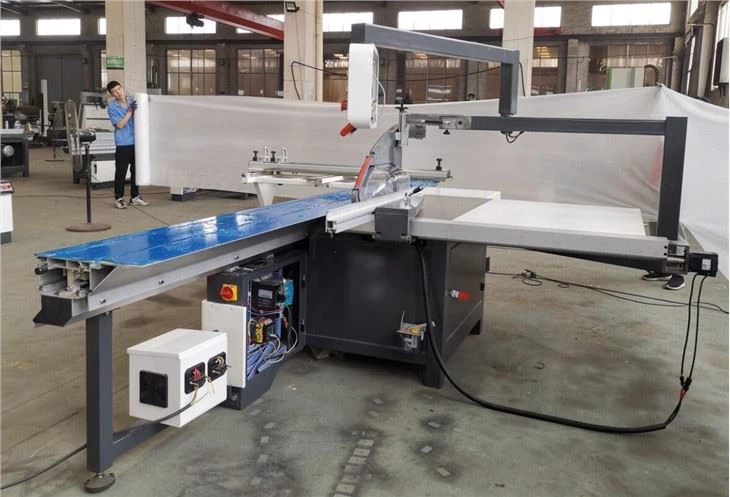
At our company, we offer a wide range of table panel saws that are suitable for making bevel cuts. Our Sliding Table Panel Saw is a popular choice for woodworkers who need a versatile and powerful saw for making bevel cuts. It features a sliding table that allows you to easily move the workpiece through the cut, and a powerful motor that can handle even the toughest cutting jobs.
Our CNC Panel Saw Machine is another great option for making bevel cuts. It uses computer numerical control (CNC) technology to automate the cutting process, which allows for greater precision and accuracy. This saw is ideal for woodworkers who need to make a large number of bevel cuts or who require a high level of precision in their work.
Finally, our High Precision Cnc Panel Saw is a top-of-the-line saw that is designed for professional woodworkers who demand the highest level of precision and performance. It features a high-precision CNC control system, a powerful motor, and a high-quality blade that can make clean, accurate bevel cuts every time.
Contact Us for More Information
If you are interested in learning more about our table panel saw products or how to make bevel cuts with a table panel saw, please contact us. Our team of experts is available to answer your questions and help you choose the right saw for your needs. We also offer a range of services, including installation, training, and maintenance, to ensure that you get the most out of your table panel saw.

References
- Woodworking Magazine. (2023). How to Make Bevel Cuts with a Table Saw.
- Fine Woodworking. (2023). Mastering Bevel Cuts on a Table Saw.
- Popular Woodworking. (2023). Tips and Tricks for Making Bevel Cuts.


